
ShadeCharger Solar-Powered Picnic Tables
ShadeCharger puts shade, seating, 120V power and USB charging in outdoor spaces without running a utility electrical circuit to the table. It is built for schools, campuses, parks, libraries and other public and commercial spaces.
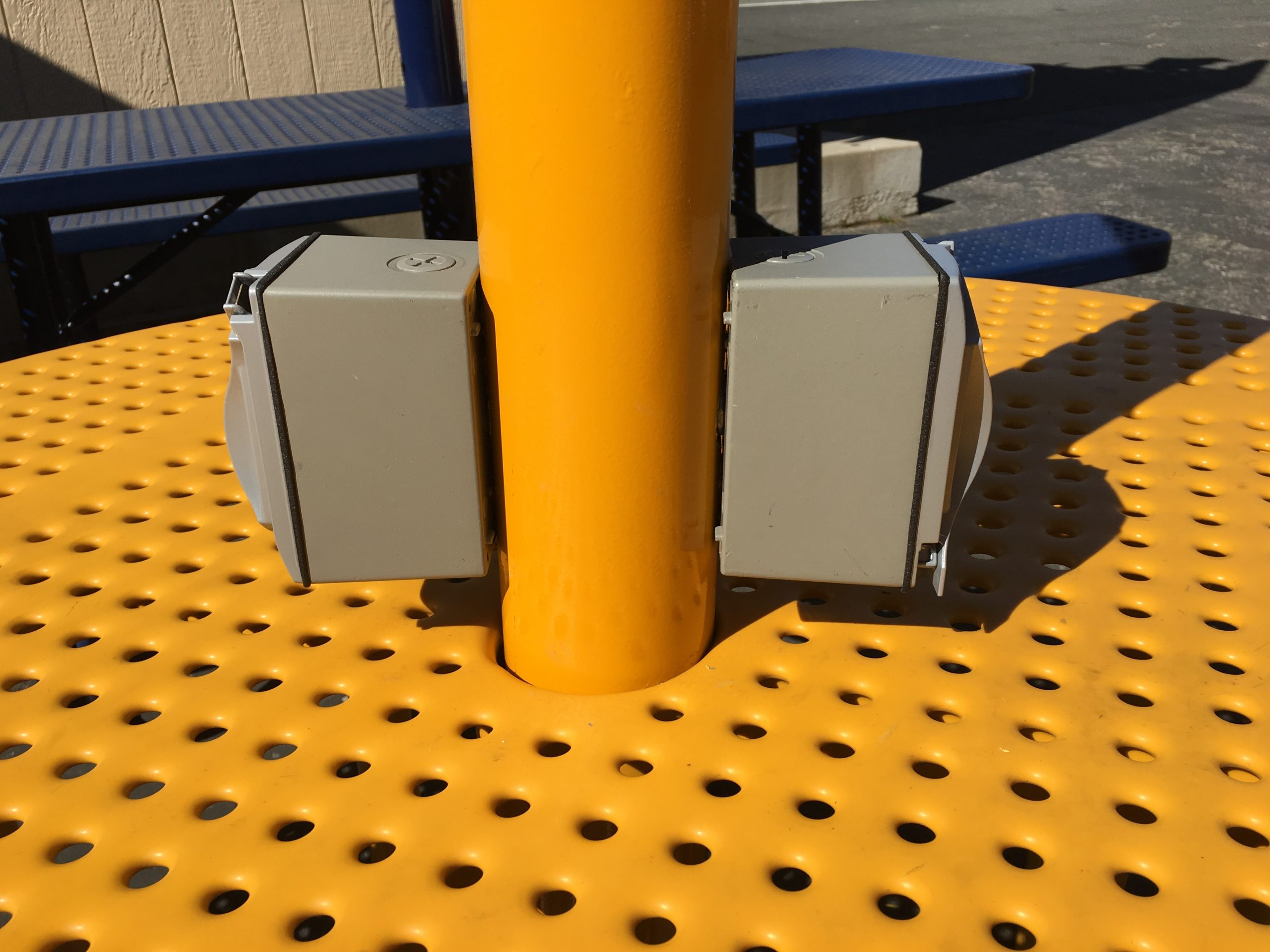
- Two 120V receptacles
- Six USB charging ports
- Commercial outdoor construction
- Daytime or battery-backed power
- Complete tables ship assembled
- Single-table and multi-table projects
Need one table? Current Cafe 1 and Yosemite pricing is linked below. Prefer to talk? Call SunnyCal at 209-464-6100.
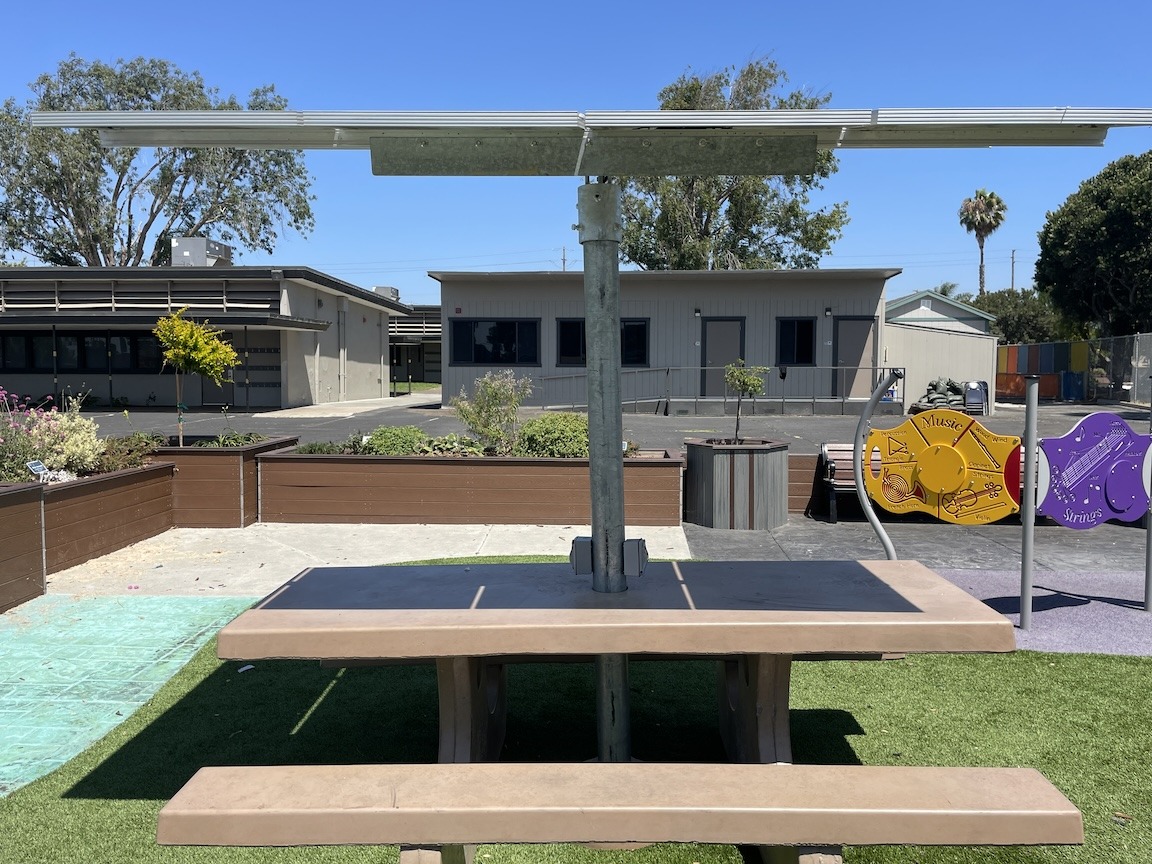
Put the Table Where It Makes Sense
Outdoor seating does not always happen near a convenient electrical circuit. ShadeCharger brings the solar generation and charging equipment to the table instead.
Avoid Running a Utility Circuit to the Table
The table produces its own solar power, so the seating location does not have to be chosen around an existing building outlet.
Give People Useful Power Outdoors
120V and USB connections support laptops, phones, tablets and other compatible devices.
Add Shade and Seating at the Same Time
The overhead solar array also provides shade over a commercial outdoor table.
Move the Table if the Site Changes
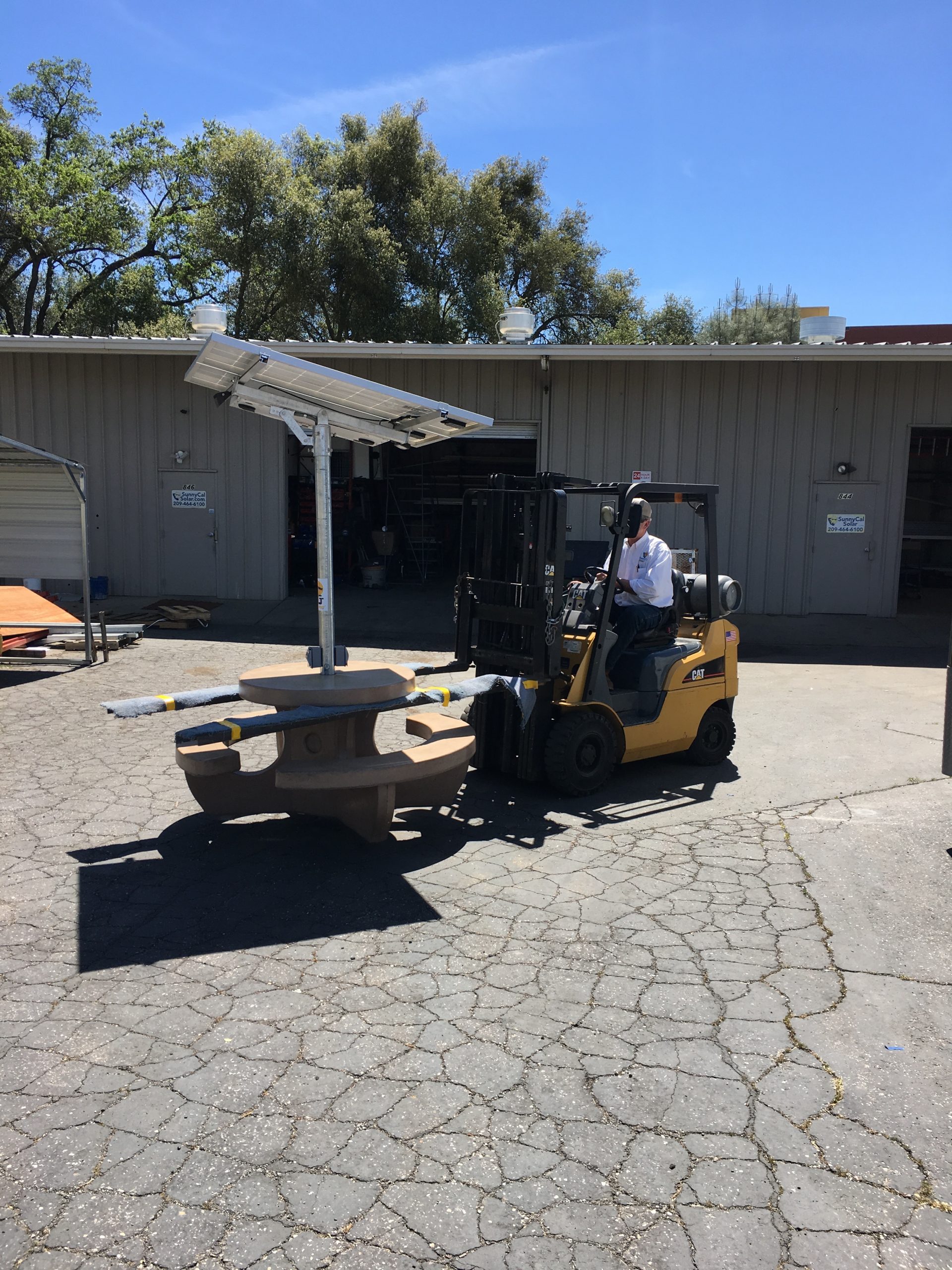
Complete ShadeCharger tables can be repositioned with appropriate forklift equipment.
See Where ShadeCharger Is Being Used
From libraries to recreation areas, ShadeCharger provides outdoor seating, shade and charging in real public spaces.
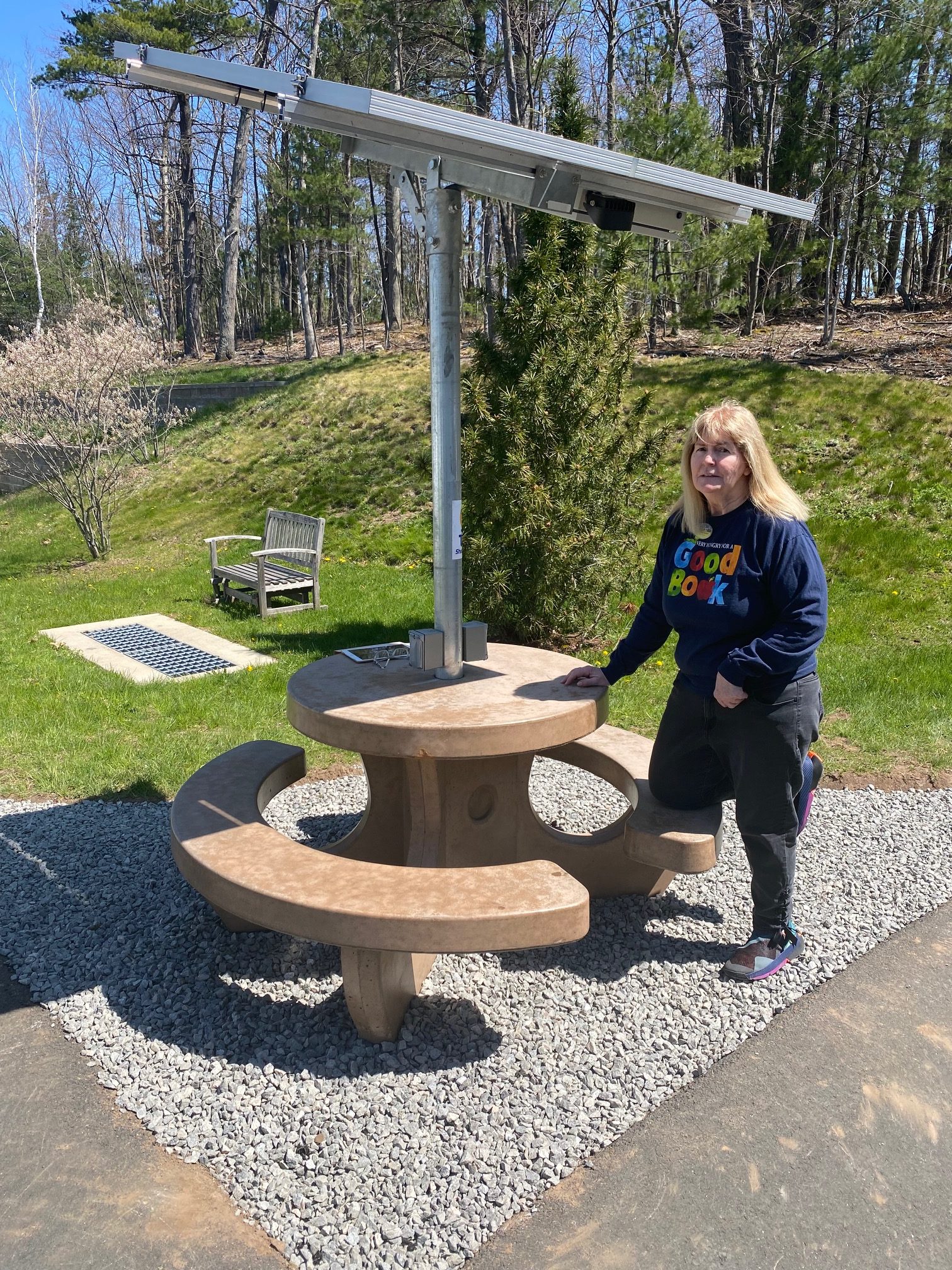
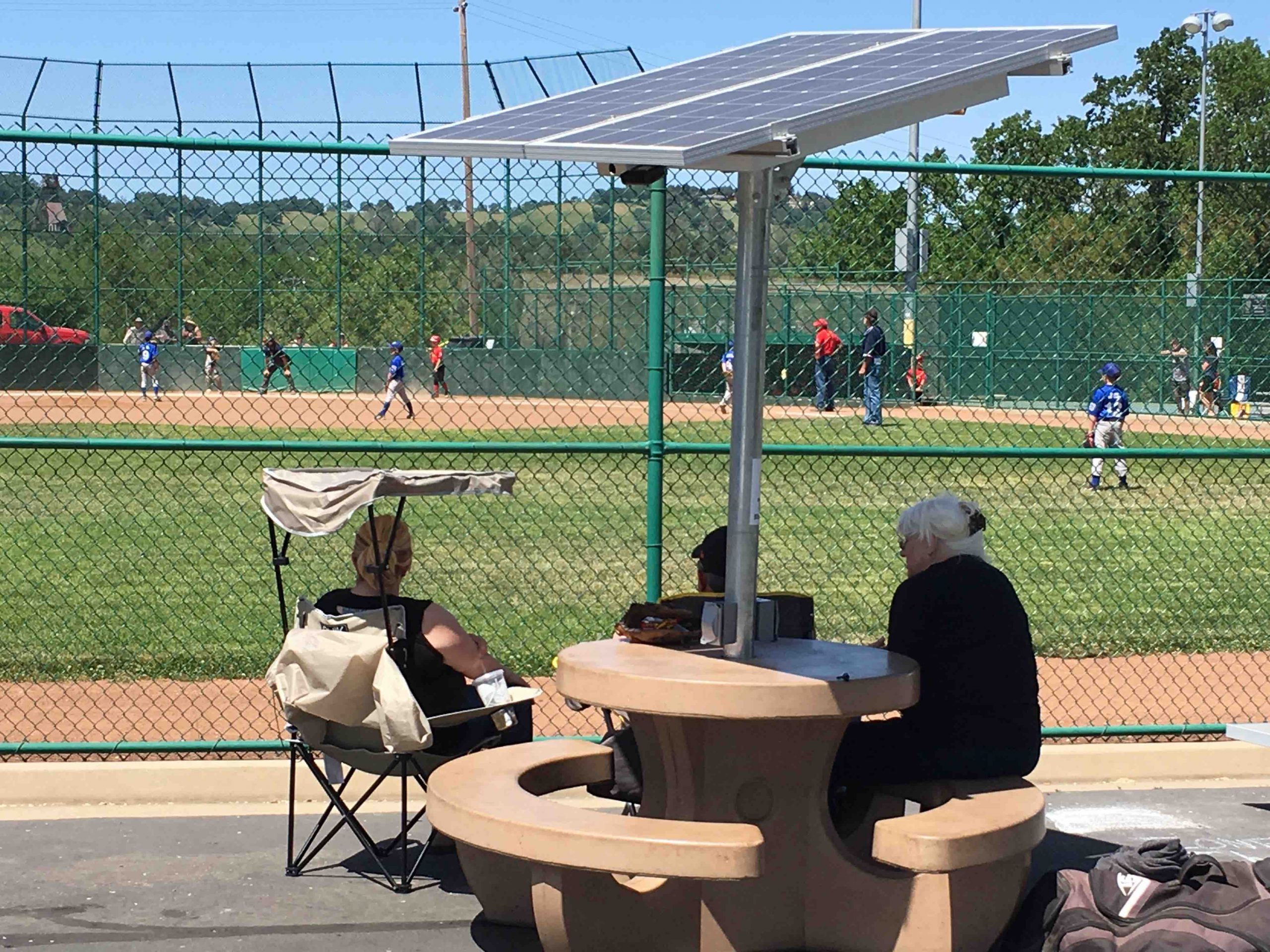
Cafe 1 or Yosemite?
Cafe 1 is the compact round ShadeCharger. Yosemite is the larger rectangular model. Both provide 120V and USB charging; the main decision is the seating layout and space available.
| Specification | Cafe 1 | Yosemite |
|---|---|---|
| Layout | Round | Rectangular |
| Seating | Six adults plus wheelchair seating space | Eight adults plus wheelchair seating space |
| Table size | 68-inch round | 92 × 65 inches |
| Solar array | 600W | 600–800W depending on configuration |
| 120V power | Two receptacles | Two receptacles |
| USB charging | Six ports | Six ports |
| Battery option | 1.44 kWh lithium option | 1.44 kWh lithium battery available |
| Wind rating | 90 mph self-ballasted | 90+ mph self-ballasted |
| Typical reason to choose it | Round layout and smaller footprint | More seating and rectangular layout |
Cafe 1
Round ShadeCharger table with seating for six adults plus wheelchair seating space.
Yosemite
Rectangular ShadeCharger table with seating for eight adults plus wheelchair seating space.
What Facilities and Purchasing Need to Know
If the table needs approval from facilities or purchasing, these are the main product and project details to start with.
How ShadeCharger Powers the Table
Solar modules above the table produce the power used by the ShadeCharger system. Depending on the configuration, power can be used during the day or stored in a battery for later use.
Solar Panels
The overhead solar array generates power and provides shade over the table.
Power System
The ShadeCharger electrical equipment manages power from the solar array.
120V + USB Charging
Users plug laptops, phones, tablets and other compatible devices into the connections at the table.
Daytime Power or Battery-Backed Power?
The right choice depends on when the table will be used and whether power is needed when solar production is low.
Power While the Sun Is Available
A daytime configuration can be a practical choice for locations used primarily during normal daylight hours.
- Solar power generated at the table
- 120V and USB charging
- No utility electrical feed at the table
- No battery required for daytime-only operation
Store Solar Energy for Later Use
A battery-equipped configuration stores solar energy for periods when direct solar production is reduced or unavailable.
- 1.44 kWh lithium battery option
- Extended charging availability
- Supports nighttime lighting options
- Runtime depends on sunlight, battery state and connected loads
ShadeCharger Options
Available options depend on the model and configuration. SunnyCal can confirm current options when preparing project pricing.
Stored solar energy for extended operating hours.
Lighting for tables used after daylight hours.
Ask SunnyCal about current Bluetooth audio availability for the configuration being ordered.
Ask SunnyCal about current Wi-Fi options for applicable ShadeCharger configurations.
Concrete-table color options are available. Confirm current choices when ordering.
Already have a qualifying heavy-duty table? SunnyCal also offers the ShadeCharger power and shade system as a separate configuration.
Where ShadeCharger Is Used
Schools
Outdoor learning, lunch and gathering spaces with power for student and staff devices.
Colleges & Universities
Courtyards, student centers and outdoor study areas where laptop and phone charging is useful.
Parks & Recreation
Parks, ballfields, recreation facilities and other public seating areas.
Libraries
Outdoor reading, study and work areas with shade and device charging.
Municipal Facilities
Civic centers, community facilities and other public outdoor spaces.
Commercial Campuses
Outdoor seating for employees, customers and visitors.
Complete ShadeCharger Tables Ship Assembled
These are heavy commercial tables. Plan for appropriate forklift equipment when the table arrives.
- Complete-table configurations ship assembled
- Forklift equipment is required for unloading and placement
- No utility electrical feed is required at the table for normal solar operation
- Tables can be repositioned with appropriate equipment
- Freight depends on the model, quantity and destination
Site-specific grounding, placement and local requirements should be confirmed for the final installation.
Specifications for Project Review
Use the current Cafe 1 and Yosemite product pages for model specifications and pricing. If your facilities or purchasing team needs additional documentation, SunnyCal can provide it.
Current dimensions, solar equipment, electrical features, options, wind information and warranty.
View Cafe 1 →Current dimensions, solar equipment, electrical features, options, wind information and warranty.
View Yosemite →Need information for facilities, design or purchasing review? Tell SunnyCal what your team needs.
Request Project Information →Confirm final specifications and selected options before ordering equipment for a specific project.
ShadeCharger Warranty
Current Cafe 1 and Yosemite product listings include warranty coverage for the table or structure, inverter and solar-panel power output.
Table / Structure
Current product listings specify one-year coverage on the applicable table and structural equipment.
Inverter
Current Cafe 1 and Yosemite listings specify two-year inverter coverage.
Solar Panels
Current product listings specify 25-year coverage on solar-panel power output.
Warranty terms can vary by component and configuration. Confirm the warranty supplied with the equipment being ordered.
ShadeCharger Is Part of SunnyCal's Specialty Solar Product Line
SunnyCal handles ShadeCharger sales, project pricing, technical questions and support.
Not sure whether Cafe 1 or Yosemite is the better fit? Tell us where the table will be used, approximately how many you need and whether you need daytime or battery-backed power.
Get ShadeCharger Project Pricing
Buying for a school, campus, park, library, municipality or commercial facility? Start with the project location and approximate number of tables.
SunnyCal can help with model selection, options, freight and the information your purchasing team needs.
See Current Product Pricing
Review current specifications, pricing and purchase options on the Cafe 1 and Yosemite product pages.
Questions Before Ordering
Who makes ShadeCharger?
Does ShadeCharger require utility power at the table?
What electrical connections does ShadeCharger provide?
What is the difference between Cafe 1 and Yosemite?
Can ShadeCharger provide power after sunset?
How are ShadeCharger tables delivered?
Can a ShadeCharger table be moved later?
What are the wind ratings?
Can I purchase one ShadeCharger?
Can SunnyCal quote several tables for one project?
Planning a ShadeCharger Project?
Tell SunnyCal where the tables will be used and approximately how many you need. We can help with model selection, options, freight and project pricing.